For drama teachers · The room
The room
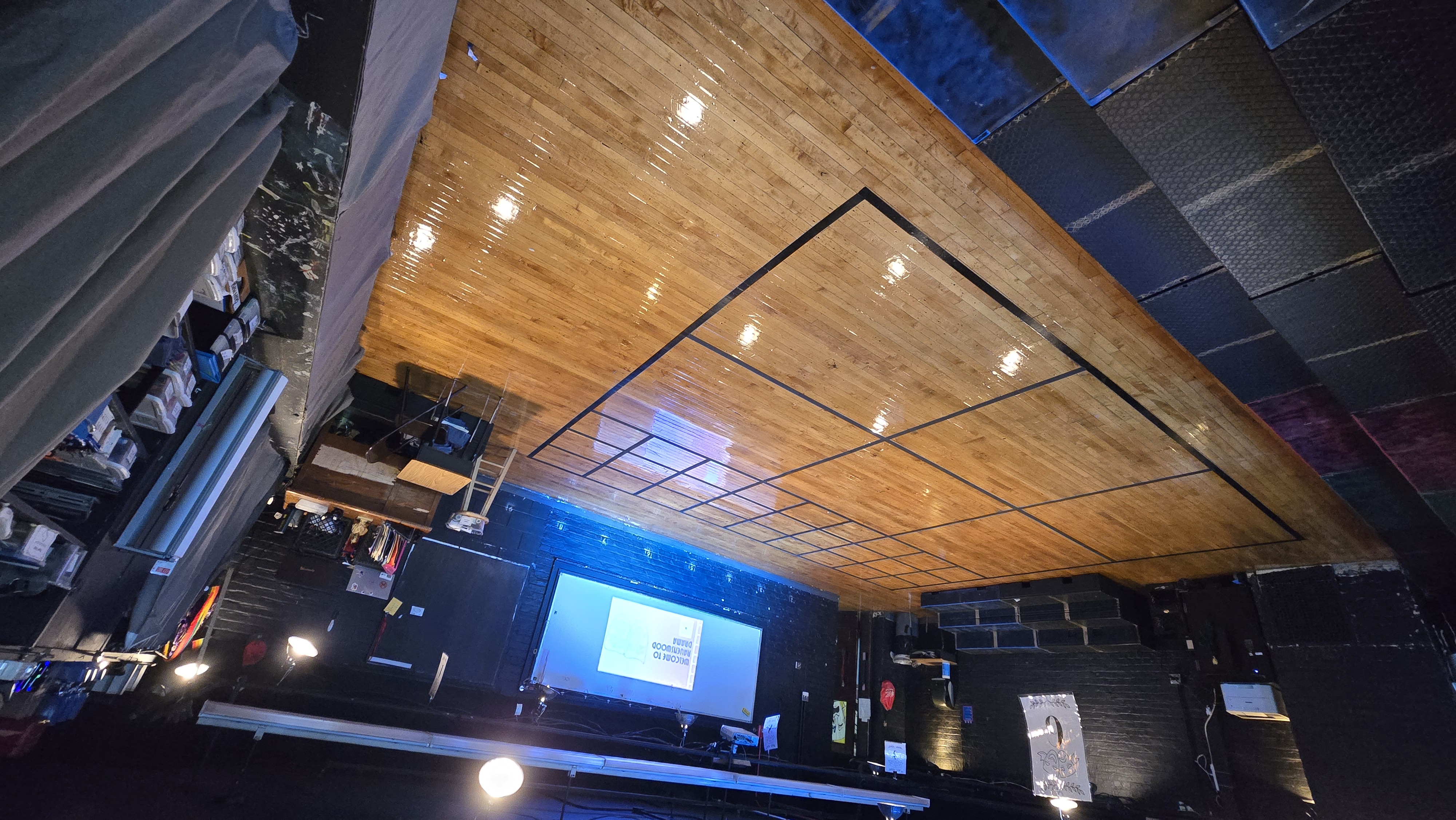
One black box, roughly 30 by 25 feet, and most of it paid for out of pocket, found in alleys, and donated from amazing parents and teachers.
This is just how I've done it. I've been lucky, but I've also fought tooth and nail to create an environment where my students and myself can explore, create, and find joy in the process of being theatre artists.
The space
Smallest classroom in the school in the oldest school in the city. I've had big spaces, I've been a travelling teacher. When this classroom opened up, I asked admin if I could paint it black. They said they didn't have money for painters...which wasn't a no. So I didn't hesitate.
Some Specficis
- Roughly 30 feet by 25 feet
- We use flipForm risers as seating. We can comfortably fit four people per riser. Two on top and two on the bottom. I keep two to three chairs in the room for visitors or if a student has a physical need for a chair. The goal is to optimise playing space
- The tape on the floor helps to designate group space as well as teach about stage diretions. The smaller boxes are starting spots for 1st and 2nd grade.
Risers and seating
Wenger flipForms are great. Heavy enough so they can be a stable base and light enough that students can move them. In third grade, the students learn to collaborate and communicate in moving the risers. They fold down into a stage or up for seating/standing.
flipFORM Risers and Seating Details
- They are a little pricey, but well worth it. Many companies sell them, but the manufacturer link is here they are around $1200 a piece. I have acquired mine over the years by piecemeal and grants. My first set was left over from a music teacher and they are around 30 years old...so they last.
- Seating: I can seat four students per riser. Two on top and two on the bottom. THis works even for my eighth graders. You could fit more, but it gets a little crowded.
- Alternative Seating: cut up yoga mat squares, taped boxes, the floor
Storage and the shelving wall
The thing that makes a choice-based room possible.
Students know where to find things
- Floor to ceiling shelving on one short wall
- Materials are labeled in plastic bins in both English and Spanish
- The bins hold all of our 'making' materials. Scissors, tape, pencils, hot glue guns, crayons, etc.
- I never touch the materials. If a student walks up to me to hand me their pencil, I point to the shelves.
Lighting
DMX Controller, Par64 LEDs, QLC+, and many youtube tutorials.
The Gear and knowledge
- Lights: Chauvet SlimPAR 64 lights. I bought them through many, many grants. They were cheaper 10 years ago, but that's how it goes. Here's an amazon link. I currently have twelve. Six are in the classroom and six are floating around for whatever other nonsense i come up with.
- How it is wired and hung
- The controller, and the order you teach it
- Programming cues with students, not for them
- What you can do with two lights and a dimmer instead
Costumes and props
Hats, Scarves, Old Halloween Costumes
Things to know
- A lot of parents are more than happy to get rid of old Halloween costumes. Every other year or so, I send out an email asking for donations.
- Storage: Big plastic bin
- These get washed periodically and closed down if I know a class has a case of "head friends" (iykyk)
Nothing in that group yet. Email me if there's something you're looking for.
Use these, change them, and don't credit me if that's awkward at your school.